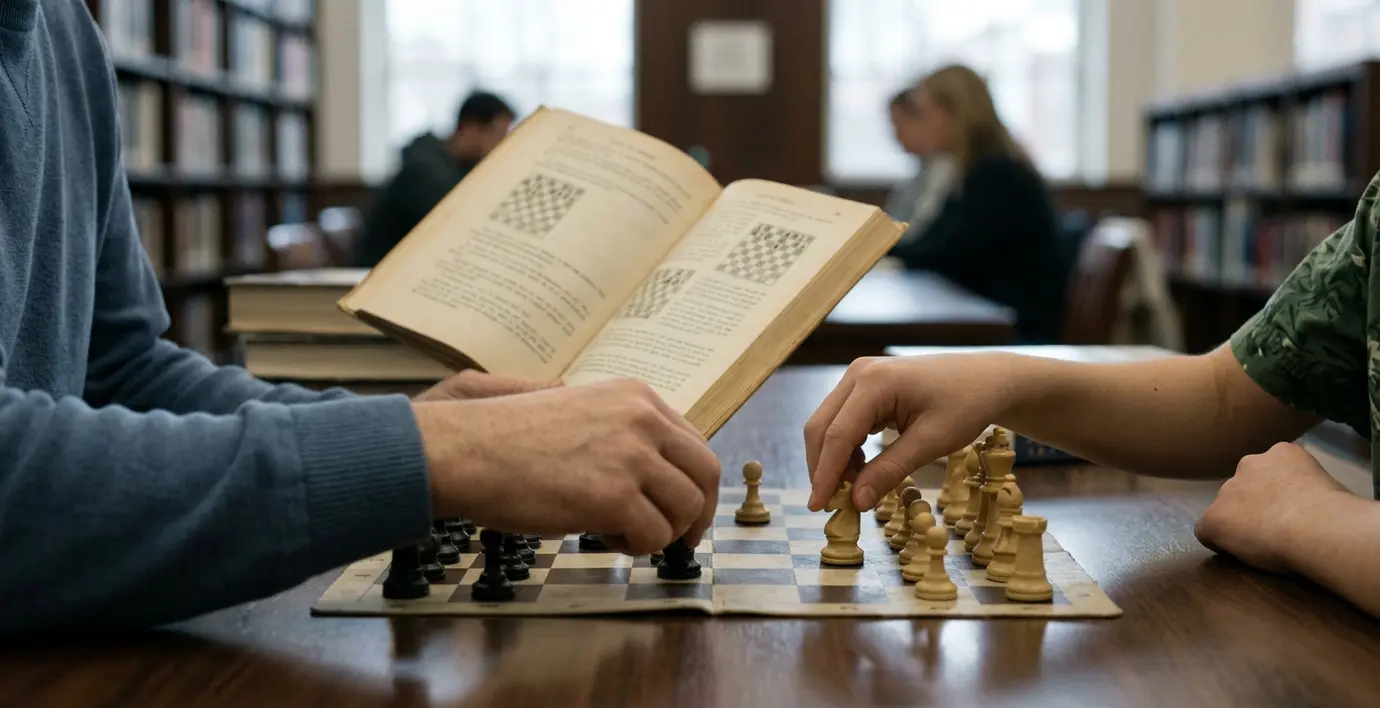
Why Do Most Junior Chess Books Fall Short?
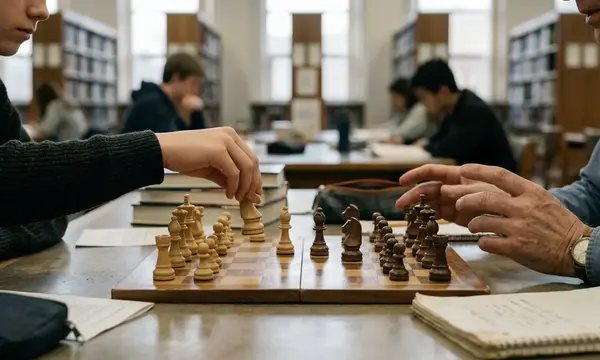
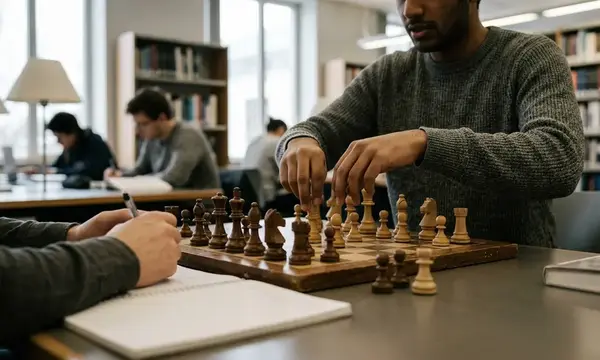
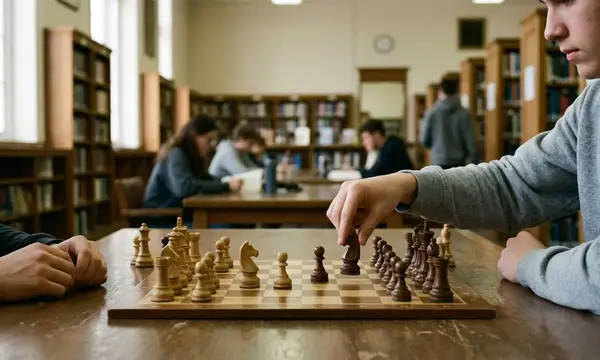
A child will often spot a back-rank mate on a quiet worksheet but completely miss the same shape when the clock is ticking and the club room is loud. This gap highlights a persistent flaw in scholastic instruction materials. Many youth chess books either oversimplify the game into cartoons or dump adult-level theory onto young readers who lack the foundational board vision to process it.
Scholastic players require structured progression tied directly to pattern recognition, rather than isolated puzzles. In a typical scholastic lesson, we operate within about a 30-45 minute club block. That leaves roughly 15-25 minutes available for direct instruction before play begins. Parents and coaches struggle to find resources that scaffold skill development age-appropriately within these tight windows.
We evaluate materials based on clarity of explanation, pattern repetition, diagram usability, sequencing, and transfer to over-the-board games. The primary target for this evaluation is players roughly ages 7-13 who can complete a legal game but still miss common tactical threats.
What Is the Chess for Juniors Book and How Is It Structured?
Chess for Juniors by Robert M. Snyder targets the beginner to early-intermediate scholastic player. This is the student who knows piece movement, check, checkmate, and basic captures, but has not yet built reliable tactical pattern memory.
The core method relies on incremental pattern recognition before introducing complex strategy. The instructional flow is best read as short concept blocks followed by diagram practice. It is not a reference manual meant to be consumed in long sittings.
A practical reading pace for younger students involves tackling one small topic cluster per session. Reviewing about 6-10 positions before moving into casual games keeps the cognitive load manageable and prevents the student from glossing over critical tactical motifs.
Where Does the Book Excel for Young Learners?
The material shines when a coach pauses on one recurring shape and asks children to name the threat before calculating moves. This mirrors how junior players actually improve: they do not calculate their way out of trouble; they recognize familiar danger.
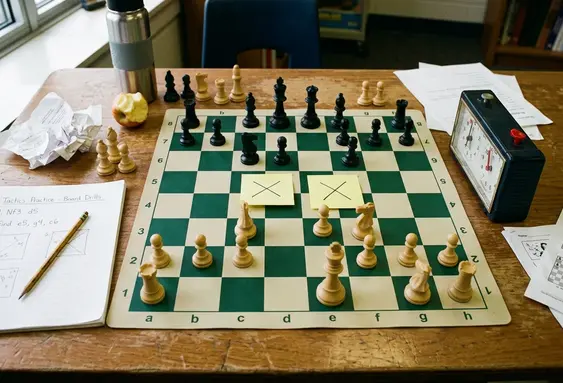
For visual learners who are not fluent in notation, the diagram-first format reduces the need to reconstruct positions from move lists. Clear, jargon-light explanations suit the 7-13 age range well, keeping the focus on the board rather than the text.
In coach-guided use, a productive drill is to ask students for three specific items before they touch a piece: the target king or piece, a forcing move candidate, and the opponent's best reply. A single tactical or mating-pattern chapter easily stretches across two to three weekly club meetings. The first meeting handles the explanation, the second introduces mixed diagrams, and the third tests the concept using over-the-board starting positions.
What Are the Book's Limitations?
The limitations become obvious when comparing the book against the needs of a child already playing serious weekend games. Once a student starts losing because of rook endings or time management, this text offers little help.
Endgame coverage requires immediate supplementation once a player regularly reaches king-and-pawn, rook-and-pawn, or minor-piece endings in tournament-length games. Fast-progressing competitive juniors may outgrow the pacing after roughly 6-10 focused sessions if they are already solving multi-move tactics independently.
A known failure case occurs when a child solves the book's themed diagrams perfectly but misses the same tactic in a real game. This happens because every exercise is labeled by motif. If the positions are never mixed, the student learns to solve the worksheet rather than the chess position. The book also lacks integrated digital practice, meaning it cannot replace digital tactics review, recorded game analysis, or clock-based practice sessions of about 20-40 minutes.
How Should Coaches and Parents Use This Book?
The most effective approach treats the book as a lesson spine, not as homework dumped on a child. A coach or parent should introduce the pattern, let the student solve a small batch, then immediately transition to a real board.
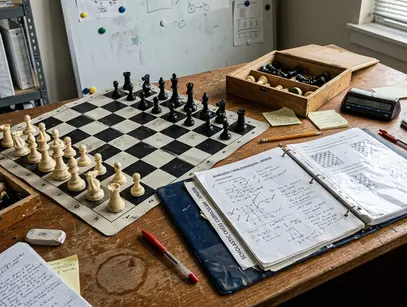
In typical club settings, a useful cadence is about 12-18 minutes of focused diagram work, followed by roughly 15-25 minutes of over-the-board play using a position related to the same pattern. For a weekly club, one chapter or topic cluster supplies material for a three-session cycle: introduce, reinforce, then test in mixed positions.
Pro Tip: A simple progress tracker helps record whether the child spots the pattern with prompting, after a hint, or independently across about 4-6 recurring motifs.
Move a student onward only when they can explain the idea aloud, solve mixed examples without knowing the chapter theme, and notice the pattern in their own games.
Who Is This Book Right For — and Who Should Skip It?
The recommendation weighs classroom usefulness more heavily than absolute completeness. For a parent or coach trying to build a reliable tactical foundation, the book earns its place when it produces repeatable habits.
It is a strong fit for beginner to early-intermediate scholastic players, especially those in school clubs, camps, small-group lessons, or parent-guided home practice. It aligns well with US Chess scholastic guidelines for early development. The book is valuable in a once-a-week school club with limited planning time, but less so in a high-intensity tournament program that already has separate endgame, notation, clock, and game-analysis blocks.
The recommendation is clear: put this book on the school-club shelf and the parent-guided home board, where a once-a-week hour and limited planning time are exactly the conditions it was written for. If your junior already calculates forcing lines several moves deep, spend the budget on dedicated endgame and opening texts instead — they will have outgrown these pages before the term is out.