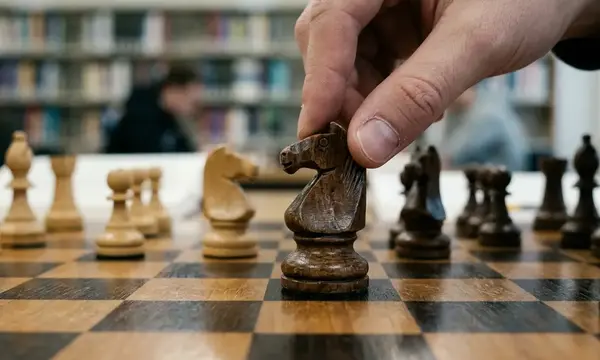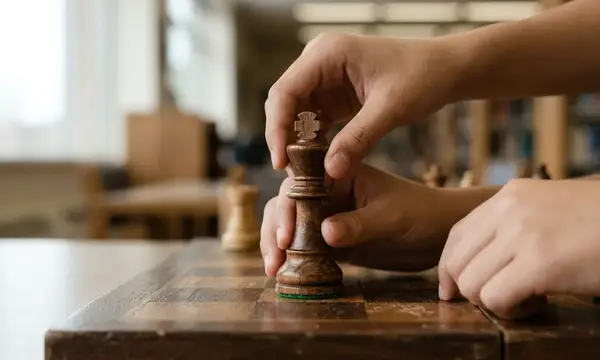

Why Take Junior Players Beyond the Tournament Hall?
Weekend tournaments often mean fluorescent lights and folding tables. A trip makes sense when players already have access to pairings and competition — the missing ingredient is a setting where chess feels older and larger. Parents and coaches look for experiences that deepen a junior's connection to the game's history.
International travel introduces logistical and educational constraints that a single coach cannot solve alone. A six-day overseas itinerary must preserve chess instruction while accommodating museum visits, hotel transfers, and meals.
The trip needs distinct roles. You need a chess educator for instruction, a travel coordinator for movement, and clear parent-facing communication to manage expectations.
What Is the Marostica Living Chess Game, and Why Does It Matter?
The destination was chosen because its chess content cannot be replicated in a classroom. The Marostica Living Chess Game anchors its teaching story in a mid-15th-century castle legend.
In 1454, according to the Marostica legend, Taddeo Parisio, Lord of Marostica castle, settled a dispute over his daughter Lionora and her suitor Rinaldo D'Angarano with a chess match rather than a duel. Today, the spectacle uses a massive outdoor board. Costumed and armed participants act as pieces, making color, side-to-move, and piece identity highly observable from the stands.
A giant-board performance gives juniors a physical reference for files, ranks, captures, and piece movement. For instructional purposes, the value lies not in the pageantry itself, but in the opportunity to pause afterward and ask students to reconstruct the moves from memory.
How Was the Tour Designed Around Real Educational Value?
Planners built the itinerary backward from the live-board performance date rather than forward from airfare convenience. The documented travel window ran from September 8 through September 14, 2004, with the principal live-board performance on September 10.
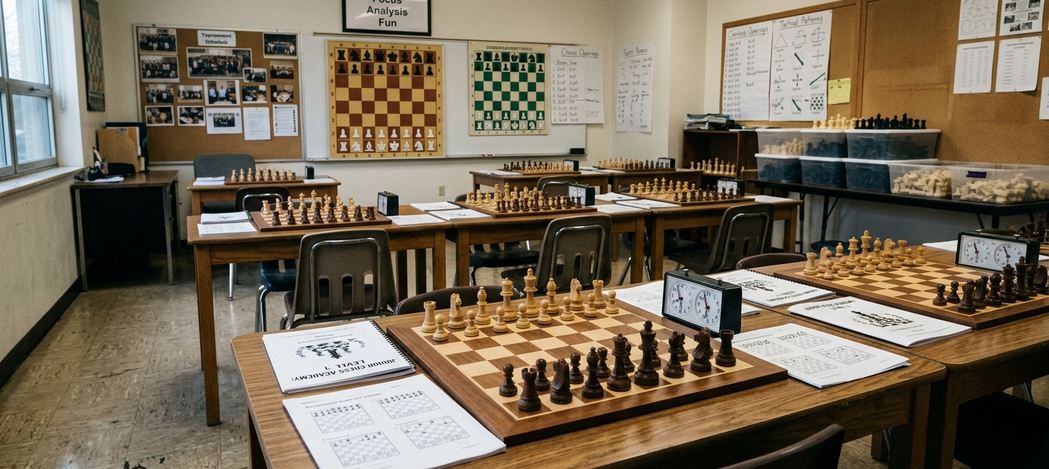
Securing VIP central-row seating was a practical workaround for visibility. Without it, a group might buy tickets to a chess-themed public performance but sit too far to read the board, leaving students entertained but unable to analyze the game. From the central rows, the group could follow the living game as a structured board lesson.
Instructional pacing required chess discussion before the performance, active observation during the event, and a review session afterward, rather than cramming all teaching into a single hotel-room lecture.
How Did Europe At Cost Handle the Travel Logistics?
The travel side was assigned to an established Italy-focused group operator. A coach's time is better spent on lesson design and supervision than on negotiating group rates.
Europe At Cost (EAC), listed in standard references as founded in 1966, operated as an Italian Flexible Independent Travel (FIT) and Group Tour Operator. Their long operating history provided a flexible model, combining fixed items like flights and hotels with chess-specific scheduling blocks. Air travel was arranged through Alitalia Airlines, a major Italian flag-carrier, avoiding the failure case where parents book separate flights to save money, causing the coach to lose instructional time coordinating late arrivals.
Lodging used 3-star superior categories: Hotel Belle Arti in Venice and Hotel Palladio in Bassano Del Grappa. This allowed the group to stay near cultural stops without shifting hotels every night.
Who Provided the Chess Instruction During the Tour?
The instructional role was treated as the core of the trip, not an add-on. Robert M. Snyder: Senior Master and author, iUniverse, led the coaching dimension.
The lead instructor held the National Master title, giving the group a coach with recognized over-the-board playing strength. His background included correspondence team experience and a Western regional championship title from the early 1970s.
His United States Chess Federation Senior Level Tournament Director certification supported instruction on pairings, rules, notation habits, and clock conduct. Prior experience as a Chief game analyst at national events was directly relevant. The central activity required students to follow a game being performed in public, translating spectacle into learning points in real time, rather than just solving static diagrams.
What Did the Junior Players Actually Gain From the Trip?
The educational gain came from sequencing.
Students did not simply attend a performance. They traveled to the setting, received chess framing, watched the game unfold physically, and then had a basis for post-game analysis. During the six-day program, the route connected Venice with Bassano del Grappa, exposing students to both a major historic city and a smaller northern Italian chess-culture setting.
Witnessing chess history performed live reinforced pattern recognition and notation comprehension in a memorable environment. The clearest learning outcome was qualitative. Juniors connected notation, board visualization, and chess history through a shared live observation.
What Are the Limits of This Case Study?
While this specific itinerary worked well for the 2004 cohort, exact logistical replication depends entirely on the shifting schedules of European municipal festivals. This account documents a single historical program model, not a standing itinerary.
The cited dates, hotel classifications, air arrangements, and operator details reflect that specific period and may have changed. The coach credentials describe the instructor's standing at the time the program was organized.
Furthermore, the Marostica Living Chess Game is held periodically. Availability and exact dates vary year to year, meaning exact scheduling must be checked before any family commits deposits. This model is strongest for families who value chess history and supervised instruction. It is less useful for players seeking a dense tournament schedule with multiple rated games.
How Can Coaches and Parents Apply These Lessons?
A coach or parent group can adapt this model by starting with the chess reason for travel, then building logistics around it. The planning order should be event access first, instructional leadership second, and tourism third.
Pro Tip: Confirm the chess anchor before booking flights. Verify the date, start time, seating location, visibility from the assigned section, and whether students can review the game afterward.
Ask the coach to define at least one pre-event lesson and one post-event review activity before finalizing the itinerary. Use a group-capable travel provider for hotel blocks, airport transfers, and parent communication rather than relying on separate family arrangements.
Set parent expectations in writing around supervision, cost inclusions, non-included meals, chess-learning goals, and downtime. Build in dedicated instruction time to preserve the trip's educational value.