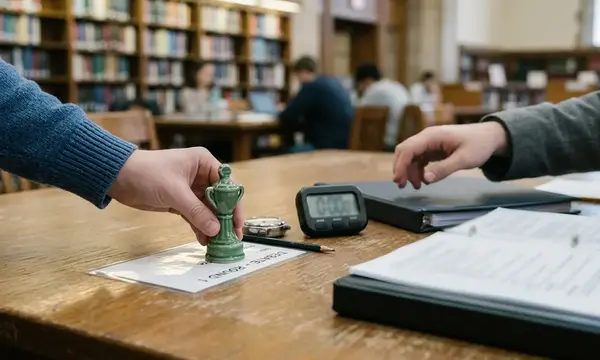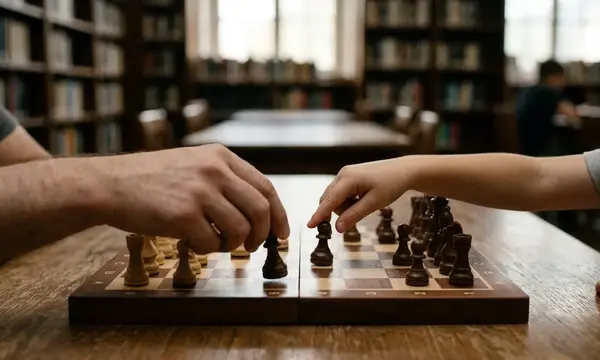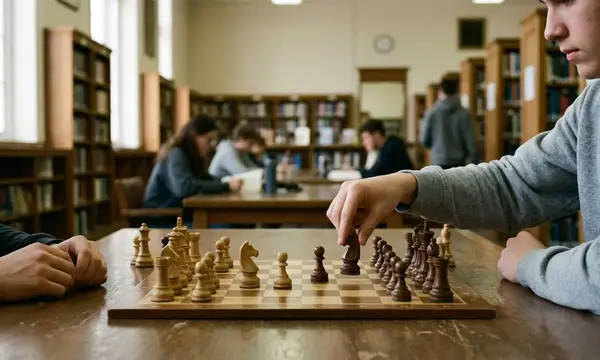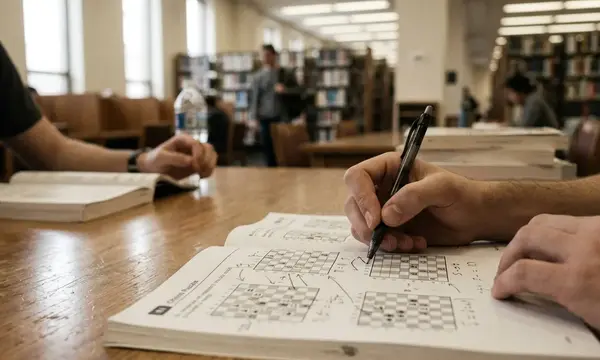
Why Does a Scholastic Chess Program Need a Real Curriculum?
A club that opens with about 40 minutes of casual games and adds a brief puzzle at the end usually looks active but does not create a reliable progression for beginners. Ad-hoc chess clubs rely heavily on free play. This stalls skill growth and loses students after one season. Scholastic chess works best as sequential instruction.
You must decide what the club will prove after six meetings. Students should be able to set up the board correctly, recognize checkmate threats, and explain one tactical idea without a coach feeding the move. Use the first six-week block to move from board orientation and legal moves into check, checkmate, forks, pins, and one simple king-and-rook mating pattern.
Give parents and administrators a visible progression sheet at the midpoint and end of the block rather than relying on tournament results alone. Keep casual games to the final 15 to 20 minutes of a one-hour session so instruction does not disappear behind unfinished games.
What Teaching Methodology Should Anchor the Curriculum?
Teaching methodology is the core subject. You must sequence concepts from board setup to tactical motifs. Anchor the teaching sequence around positions every child can see at the same time.
Use a demonstration board for whole-group assembly instruction so every student follows the same position. The instructor demonstrates one pattern on a wall board, asks students to name candidate moves, and then guides the class through the variations.
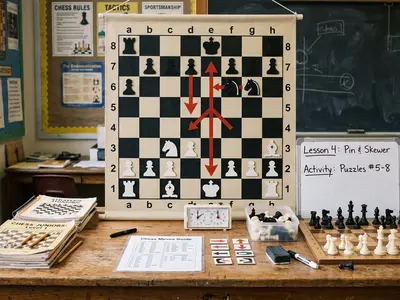
A practical one-hour lesson can run as a short review, a focused new concept, guided puzzle work, and supervised play. Build around pattern recognition. Pattern sets should repeat the same motif across at least six to ten positions before mixing themes. Beginners often need multiple nearly identical forks or mate-in-one shapes before the idea becomes automatic.
Senior Master Robert M. Snyder is a useful reference point for structured scholastic group instruction because his model emphasized whole-class teaching, demonstration-board discipline, and tactical pattern repetition.
How Do You Structure the Weekly Sessions and Class Length?
Build the calendar backward from the school day. Arrival, roll call, board setup, instruction, practice, cleanup, and dismissal must all fit without depending on parents arriving early or teachers extending their hours.
Ongoing weekly one-hour school sessions form the backbone of a year-round program. Schedule one recurring 60-minute session each week, preferably with the same room and board storage location to reduce setup loss. Open every class with a demonstration-board position already placed before students enter. This saves several minutes compared with building the position after attendance.
A six-week class block is a practical unit for billing and measurable progress milestones. Sequence each block carefully. Week one introduces the theme. Weeks two through four drill and expand it. Week five applies it in scored practice games. Week six runs a small in-class event or skills check.
Which Billing Model Fits Your School or Club?
Choose the payer before writing the flyer. If the school or parent group pays directly, the registration message is about access and schedule. If families pay individually, the message must include pricing and payment deadlines.
Entity fee-based programs mean the school or PTA contracts and pays for the program directly. These programs usually need a purchase order, invoice contact, room reservation, and dismissal plan before the first lesson is advertised.
Student fee-based programs rely on direct-to-student billing. A student-pay program can launch quickly with a small group, but it may exclude beginners whose families would participate if the school or parent group funded the class. The referenced student-pay model used about $60 for a six-week class block. Treat that as an archival price point, not a current market recommendation. In that older model, balance instructions were handled by certified mail, so the administrative timeline needed a mailing buffer rather than assuming same-day email confirmation.
Pro Tip: Entity models reduce access barriers, while student models are easier to launch without administrative approval.
What Safety and Certification Standards Apply to Instructors?
Handle clearance before curriculum polish. A coach with a beautiful lesson plan still cannot work with juniors until the district accepts the background-check pathway, visitor rules, and supervision agreements.
Background clearance is non-negotiable for anyone working with juniors. Ask the school for its required clearance route before collecting student payments. Districts may require state criminal-history review, fingerprinting, mandated-reporter training, or district-specific volunteer approval. A district that treats the chess coach as an outside vendor may require different clearance paperwork than a district that classifies the same person as a volunteer.
Clearance providers in the referenced model included the Colorado Bureau of Investigation and the California Department of Justice. This shows why a multi-state chess program cannot rely on one universal checklist. If rated scholastic events are part of the plan, assign one adult to verify current tournament-director credential requirements with the United States Chess Federation before advertising rated play. USCF tournament director certification supports running rated scholastic events.
How Do You Train the Coaches Who Will Deliver It?
A curriculum is only as strong as the coaches running it. Teacher training is part of the build. Train coaches to deliver the same lesson shape, not merely the same chess content. The goal is that a substitute instructor can walk in with the week-four fork lesson and still use the same opening routine.
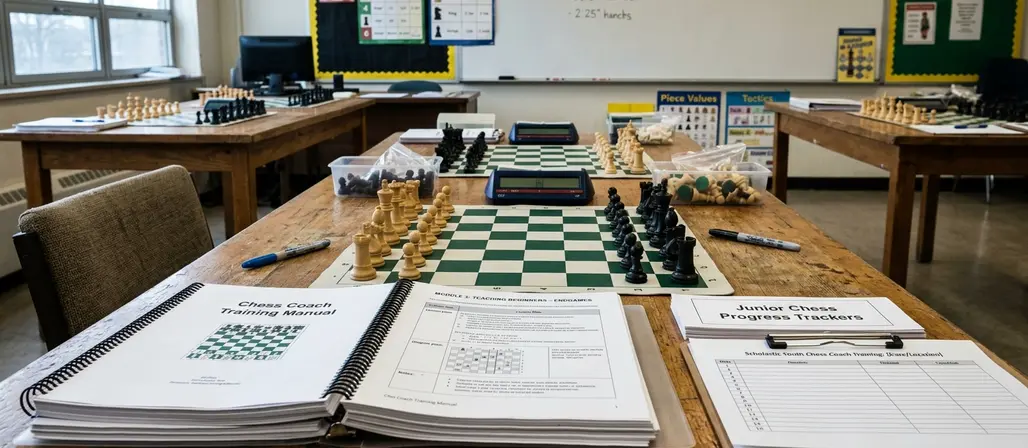
A useful professional development format is a two-day agenda covering teaching methodology, classroom management, curriculum sequencing, tournament logistics, and supervised practice teaching. One archived coach-training conference model included both workshop sessions and a field trip component. This is helpful for showing instructors how scholastic chess operates outside a lecture room.
According to measurements from that archived model, early registration closed about 90 days before the first training day, giving organizers time to confirm room setup, printed materials, travel plans, and attendance counts.
What Are the Limits of This Curriculum Model?
Keep historical details in a clearly labeled example box instead of blending them into current recommendations. The curriculum logic remains useful, but fees, venue arrangements, clearance channels, and federation rules change.
The fees, venues, and clearance providers cited reflect a specific program around 2005 and named jurisdictions. They are illustrative, not current standards. Background-check requirements differ by state and district. Always confirm locally. Do not copy archived clearance language into a current parent flyer. Ask the school office which clearance documents must be completed before the instructor is on campus.
Pricing around $60 per six-week class is a historical reference point. Tournament-director titles and rating-event procedures should be checked against the current federation rulebook before the program promises rated games.
Warning: The archival prices, mailing procedures, venue details, and clearance examples are illustrations of one program model, not current legal, financial, or federation standards.
How Do You Launch Your Program Step by Step?
Launch in dependency order: permission first, safety second, calendar third, curriculum fourth, family communication fifth. That prevents the common mistake of advertising a chess class before the school approves the room.
Confirm the billing model and room access at least four to six school weeks before the first session if the program needs school approval. Secure instructor background clearance through the appropriate state body. Build the first six-week block around one-hour weekly meetings, one demonstration-board lesson per week, and a week-six skills check or mini-tournament.
Prepare a single-page coach sheet for each session. This sheet should list the objective, starting position, three sample questions, puzzle set, supervised-play focus, and cleanup reminder. Pursue USCF certification if you intend to run rated tournaments.
Key Takeaway: Scholastic Chess Curriculum Launch Checklist
- Select entity-paid or student-paid billing before sending flyers.
- Confirm room, storage, dismissal rules, and adult supervision with school leadership.
- Complete the required state or district background-clearance process.