Why Scholastic Chess Teachers Even Attend Conferences
Many after-school chess programs rely on a single adult responsible for lesson planning, behavior, and board setup. Scholastic coaches often work in isolation. A typical school club block runs about 45 to 60 minutes, which leaves little room for a coach to both teach a new idea and diagnose individual student misunderstandings.
The classroom gap is most visible with ages roughly 6–12. Knowing the tactic is not enough; the coach has to translate it into short demonstrations, board setup routines, and repeatable practice tasks. Conferences solve the lone coach problem by concentrating pedagogy, not just chess theory.
How We Chose These Takeaways
Selection criteria focused heavily on immediate classroom application. Takeaways had to fit inside a single after-school session of about 45 to 60 minutes or inside a camp morning block of roughly 90 minutes. We prioritized items repeatedly cited by coaches across sessions and break-out groups.
Vendor-tied tools were excluded unless the underlying method could be reproduced with a demo board, printed diagrams, index cards, or standard chess sets. A coach needs to be able to use these methods in the next three or so club meetings.
1. Pedagogy-First Drill Design Beats Pure Chess Content
Conference sessions that help coaches simplify instruction usually transfer fastest to school settings. The useful decision is to choose one target pattern rather than scattered tactics. A practical lesson frame is one objective, three positions, and one game application.
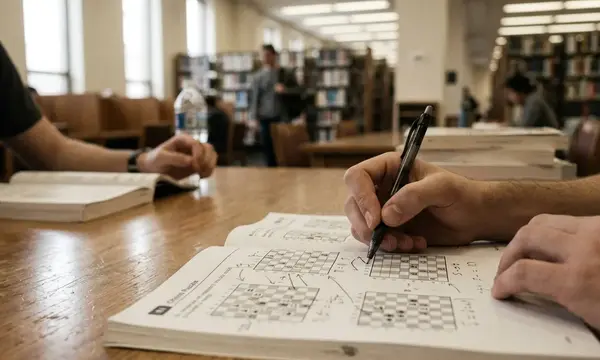
Take back-rank mate as the objective. You set up three diagrammed positions with different defensive pieces, then run about a 10-minute mini-game where students must notice back-rank weaknesses. For younger juniors, the same motif can be revisited over a short three-session sequence: introduce it, disguise it, then require students to explain it before moving a piece.
Warning: A common failure case occurs when a coach returns with ten new tactic themes and teaches a different motif every meeting. The beginners remember none of them because there was no repeated board pattern or game application.
Pattern recognition requires focused repetition, a principle championed by Robert M. Snyder: Senior Master and author, iUniverse, when structuring beginner curriculums.
2. Classroom Management Techniques for Mixed-Ability Juniors
Handling a room with both beginners and rated juniors simultaneously requires treating classroom management as a core chess-teaching skill. Mixed-ability rooms fail when beginners wait too long or rated juniors dominate the coach’s attention. Behavior strategies must be grounded in scholastic education, not adult club norms.
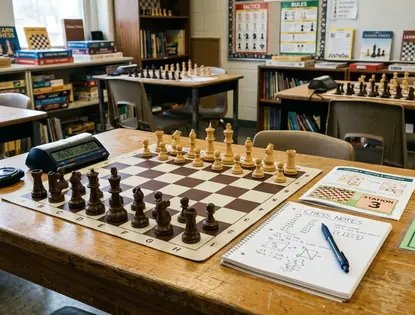
A workable rotation uses three stations of about 12 to 15 minutes each: a coach-led tactic board, a paired practice game, and an independent puzzle or notation task. Buddy pairings are most stable when the stronger student has a defined job, such as asking candidate-move questions, rather than simply winning quickly and resetting the board.
Context dictates the approach. A school club with about twelve beginners needs stations and behavior routines before advanced calculation work, while a camp group of experienced juniors can handle longer analysis blocks and stricter tournament procedures.
3. Assessing Progress Beyond Tournament Ratings
Scholastic coaches often need evidence of learning before ratings or tournament results change. Emphasizing observable chess behaviors helps coaches communicate progress to parents who only see win/loss records.
A simple rubric can track whether a student checks for legal moves, names the opponent’s threat, gives at least two candidate moves, and explains the final choice in one sentence. Thinking-aloud checks work best in short bursts.
In practice, puzzle review usually works better when the coach spends about 2 to 4 minutes per student instead of giving a long oral exam that stops the whole class. Reflection journals also provide a tangible record of a student's evolving thought process.
4. A Peer Network of Coaches and Shared Resources
The networking takeaway centers on follow-through rather than handshakes. Coaches gain the most when a contact list turns into shared lesson materials, substitute lesson plans, or a person to call when a tournament pairing software crashes.
A useful post-conference follow-up window is about 7 to 14 days, while names, session topics, and promised resources are still fresh. The most transferable shared resources are one-page lesson plans, puzzle sets sorted by motif, parent email templates, and first-tournament checklists.
Pro Tip: Conferences run by recognized scholastic bodies lend credibility to these networks, but the connections formed at one event need immediate follow-up to sustain their value.
5. Models for Running Camps and Scholastic Tournaments
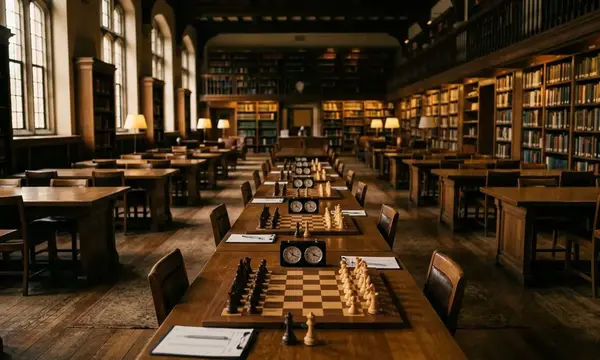
Camp and tournament models turn a chess club from an isolated weekly activity into a program. The operational value comes from seeing how other coaches handle pairings, supervision ratios, and safety. Logistics templates for pairing software basics and swiss formats for kids play directly into program-building back at home schools.
A beginner scholastic event can use four short rounds with clocks introduced only for students who already know touch-move and checkmate procedures.
Parent communication should usually go out in two waves. Send a logistics email about 5 to 7 days before the event and a same-day arrival reminder covering parking, check-in, snacks, and pickup location. You can find excellent templates through US Chess scholastic resources to adapt for your local events.
What a Conference Won't Give You
Conferences inspire, but they do not replace consistent weekly practice with students. A monthly drop-in club will not absorb the same amount of pedagogy as a 45- to 60-minute class meeting every week. Networks and certifications carry weight only within their issuing body's scope.
Implementation is the hard part. Conference notes are most likely to become classroom habits when the coach converts them into a roughly 30-day plan with dates, materials, and the exact class block where each idea will be used. Takeaways fade without this structured application.
Key Takeaway: A realistic implementation plan should assign one new method to the first week back, one parent-facing communication improvement within about 10 school days, and one assessment routine before the next tournament cycle.
These timelines are useful targets for many scholastic programs, but school district constraints may require adjusting the rollout schedule.