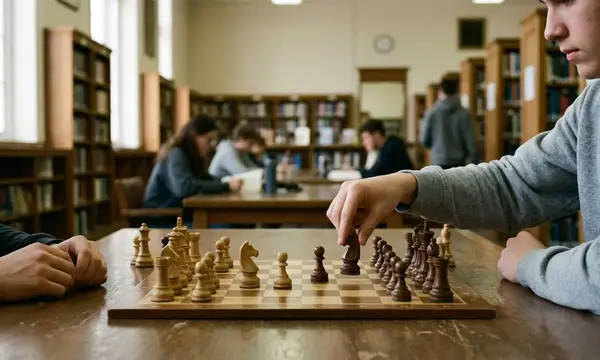
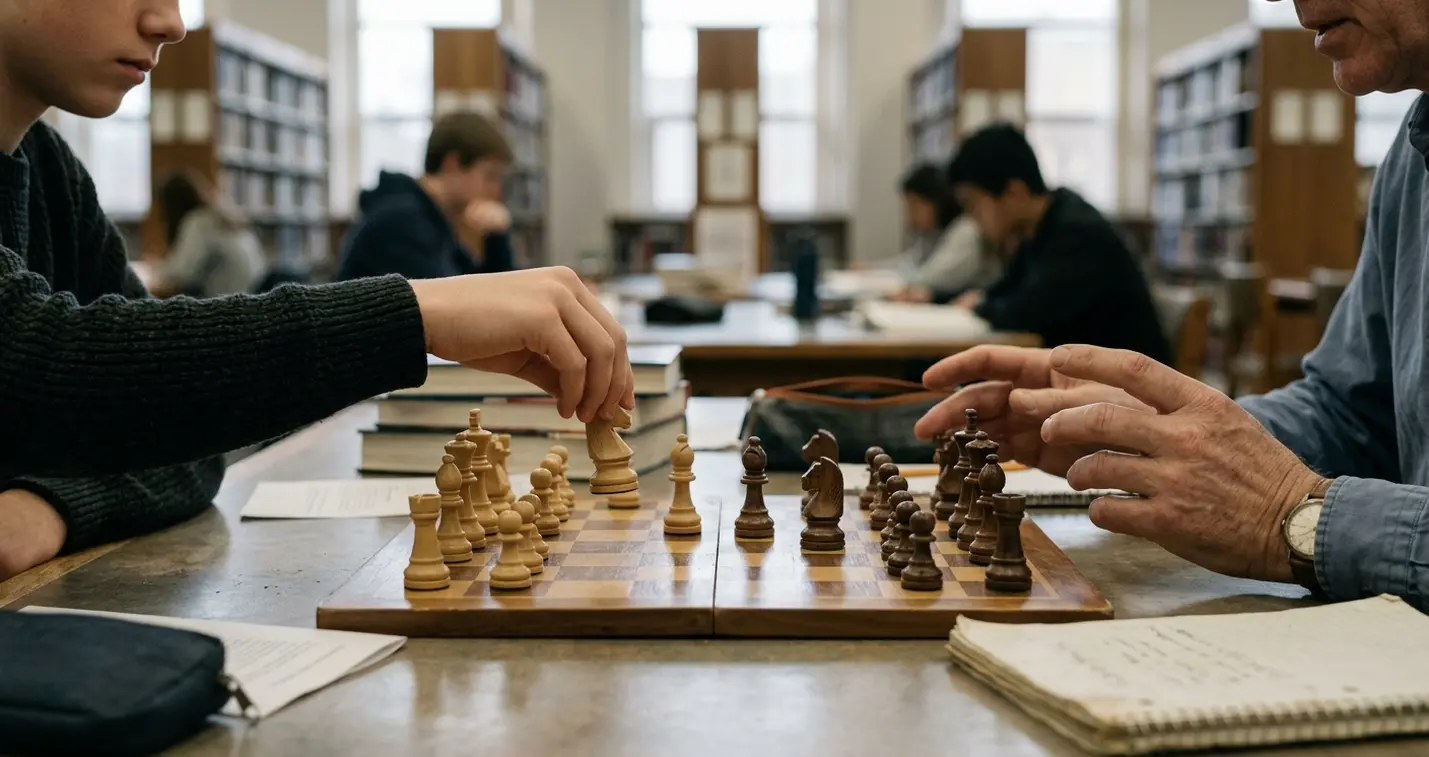
The Problem: Why We Underestimate Chess in Schools
School decision-makers frequently approve chess as an after-school activity long before they treat it as formal instruction. In many elementary programs, chess occupies a roughly 30- to 45-minute afternoon slot. That scheduling makes the game look like pure recreation, even when a well-designed lesson demands intense planning, memory, and reflection.
The recognition gap becomes obvious during the first three or four club meetings.
Beginners learn legal moves quickly. They figure out how the knight jumps and how the rook slides. Yet they still require adult structure to explain why one move is safer than another. A standard chessboard has 64 squares, but the core educational question is not board geometry. It is whether students learn to pause, compare options, and predict consequences before they touch a piece.
What Actually Happens in a Young Mind at the Board
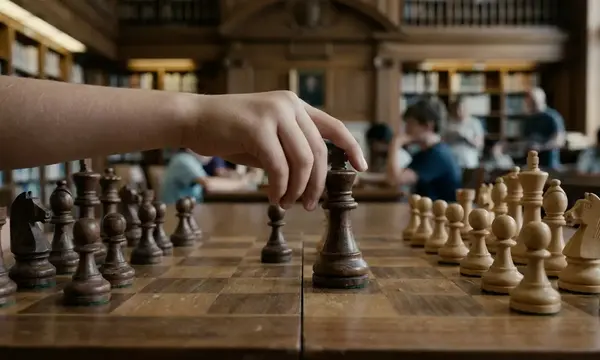
The clearest evidence of cognitive work is behavioral. A child stops moving instantly, names a threat, and checks a capture. This is pattern recognition in action.
We see this mental modeling with recurring scholastic motifs. Students learn to identify knight forks, back-rank mates, loose pieces, pins, skewers, and undefended kings. A practical coaching sequence asks a student to hold a rough two- to four-move candidate line in mind before committing to a decision. The internal monologue sounds like: If I check, they block; if I capture, they recapture; then what is left hanging?
Pro Tip: In a roughly 15- to 20-minute tactics segment, students can review a single motif across several positions without turning the lesson into rote memorization.
Consequence-based thinking emerges naturally from this process. A student realizes that a quiet pawn move might open a diagonal, weaken a square, or remove a defender two moves later. Every push of a pawn teaches cause and effect.
My Argument: These Skills Outlast the Game Itself
I argue that the true value of scholastic chess lies in transferable habits. Structured instruction repeatedly rehearses patience, planning, and self-correction.
After a roughly 25- to 40-minute scholastic game, the most teachable moment is rarely the final checkmate. It is almost always an earlier position where the child ignored a threat, moved too fast, or failed to ask what the opponent wanted. Analyzing a lost game models a healthy, analytical response to failure.
A useful post-game review takes about five to seven minutes. You ask three concrete questions:
- Where did your plan start?
- Where did it change?
- Which move would you reconsider?
The transferable habit becomes visible when a student says, "I moved before I checked the capture," rather than, "I am bad at chess." Conversely, a child who plays only fast casual games, never reviews losses, and receives praise only for winning often becomes more impulsive rather than more reflective.
But Does the Research Really Prove 'Far Transfer'?
Cognitive science distinguishes near transfer from far transfer. Near transfer involves recognizing similar tactical patterns across different board positions. Far transfer involves expecting chess to directly improve unrelated academic performance. Research on chess and cognitive skill transfer actively debates this broader application.
Recorded results show that short instructional blocks of roughly 8 to 12 weeks can produce measurable engagement and skill growth. However, that timeframe is simply too brief to prove lifelong cognitive change on its own. Research designs vary widely by student age, instructor quality, prior chess exposure, lesson frequency, and whether the comparison group receives another structured enrichment activity.
Warning: While my claim here is pedagogical and experiential—not a guarantee that chess instruction will produce measurable academic gains for every child—the deliberate-practice habits remain highly valuable.
Even if far transfer remains contested in the literature, the focus and engagement required to navigate a complex game hold independent educational merit.
How to Teach Chess So the Cognitive Benefits Stick
I used to lead some beginner groups with opening traps because they produced quick wins. I dropped that emphasis when it became clear that students were copying moves without explaining threats. Opening-trap instruction creates short-term confidence but weakens transfer when students cannot explain why the trap worked.
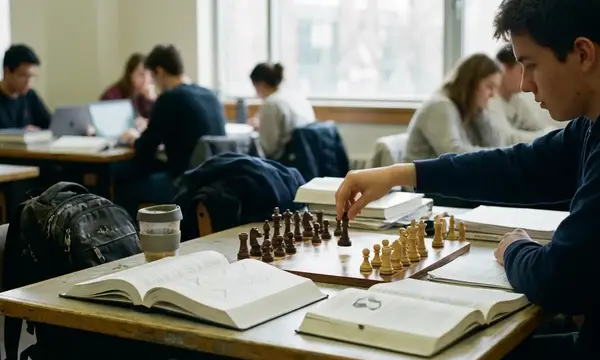
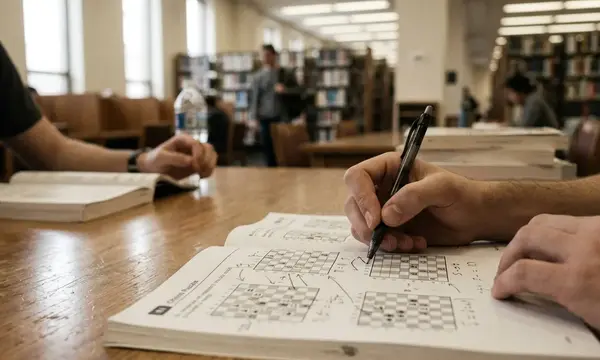
Structure beats drilling. A workable 45- to 60-minute junior session follows a specific rhythm. Start with about seven minutes of warm-up puzzles. Spend around 12 minutes on one theme. Allocate roughly 20 to 25 minutes for paired play. Finish with about five to eight minutes of reflection.
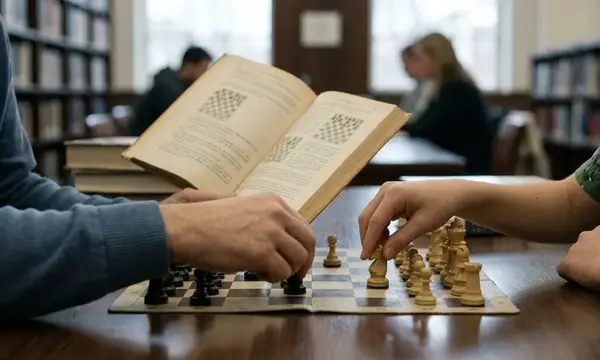
Spaced pattern review cements these concepts. Revisit the same motif after roughly 48 to 72 hours if the program meets frequently. Hit it again about 10 to 14 days later in mixed positions. As Robert M. Snyder, Senior Master and author, emphasizes in foundational texts, mastering basic principles outpaces memorizing cheap tricks.
Managing the Tournament Environment
Low-stakes camp or tournament formats serve as excellent practice for decision-making under pressure. Use short game-analysis cycles: one game, one critical position, one written or verbal takeaway before the next round.
For early tournament practice, clocks set to about 10 minutes with a small increment, or about 15 minutes without increment, provide enough time for basic planning while keeping a scholastic room moving.
Key Takeaway: Better coaching prompts build metacognition. Ask "What was your plan?", "What changed after their last move?", and "Which candidate move did you reject?" instead of simply stating "That was a mistake."
Context dictates the setup. A group of around six beginners can use board-by-board questioning. A mixed-level room of about 24 students requires stations, puzzle sheets, or assistant coaches to preserve reflection time. When we build the environment correctly, the cognitive benefits take care of themselves.