Why Does the Right Summer Chess Camp Matter for a Junior Player?
Parents face a crowded field of summer programs with vastly different teaching quality and structure. A camp that keeps children busy with casual games may be pleasant, but the better fit for a developing junior is one that deliberately builds pattern recognition and tournament readiness. I frequently see families struggle to match a child's age and skill level to the right format.
Use the stated age range as a hard screen first. Programs serving juniors from roughly ages 5 to 17 still need different groups for early elementary, middle school, and high school players. For a 5- or 6-year-old, ask whether lessons are broken into shorter teaching blocks with supervised play between them. In practice, a child around age 6 who knows how pieces move but cannot yet sit through about a 45-minute analysis session may regress socially in a tournament-heavy camp even if the coaching is strong.
Conversely, older rated players can usually tolerate longer analysis sessions. A useful camp description tells you whether the day includes instruction, supervised games, review, and some form of feedback rather than only listing drop-off and pick-up times.
What Should You Evaluate Before Comparing Camps?
Before comparing brochures, place the child in a training lane: beginner, developing club player, or tournament-focused junior. One practical approach is to first consider the most advanced-looking camp and work backward to find the right fit.
Beginners need piece safety, checkmate patterns, opening principles, and guided mini-games before heavy tournament preparation. The tournament lane requires notation practice, clock handling, post-game review, and exposure to US Chess Federation scholastic ratings.
Verify instructor credentials beyond a generic title. Ask who teaches the main lesson, who supervises practice games, and whether assistants are trained to correct recurring mistakes. For example, Chess For Juniors lists Robert M. Snyder, Senior Master and author, iUniverse, as lead instructor. If a provider lists group instruction on Tuesdays and Wednesdays plus weekend workshops, ask whether those are separate offerings or part of one camp sequence. Confirm the format early: day camp, residential camp, weekend workshop, or a portable program that can be brought to a school, club, or community site.
How Can You Judge the Quality of Instruction?
Key Takeaway: Judge instruction by what a child is expected to do after the lesson, not by how impressive the lesson sounds to adults.
Good scholastic teaching usually moves from demonstration to guided practice to independent application. Ask whether the coach uses a wall demonstration board, projection board, or printed diagrams when teaching groups larger than a small table.
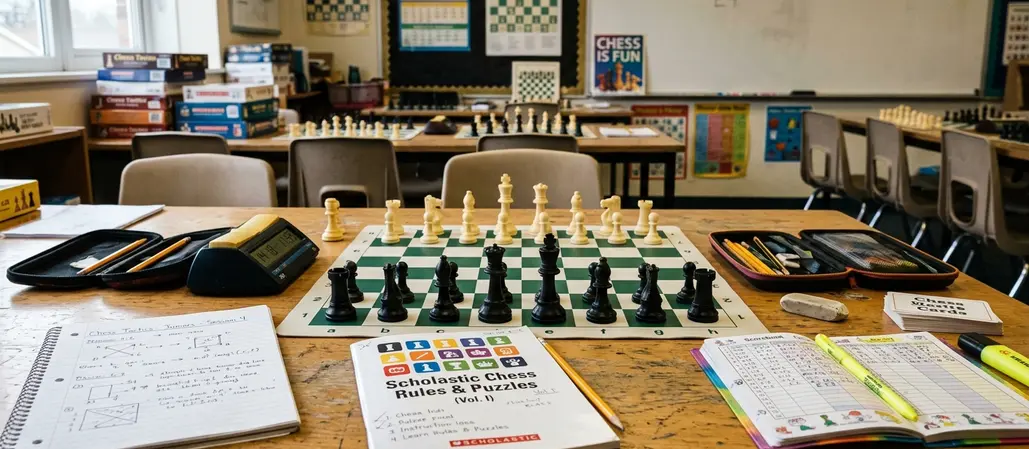
A low-risk preview can be a single open practice session where non-members observe the teaching style, pacing, and discipline standards before registering. Supporting resources also matter. Look for a lending library, beginner-to-intermediate puzzle books, annotated game collections, and supervised use of chess computers or training software.
For rated-play readiness, ask whether students practice touch-move, notation, clock use, pairing procedures, and post-game score-sheet review. A strong lesson plan should include positions students will see repeatedly: forks, pins, back-rank mates, discovered attacks, basic pawn endings, and king-and-pawn opposition.
What Logistics and Costs Should You Confirm?
After the teaching fit is clear, move to the contract details. Put every required cost into one list before comparing prices, because chess camps can look inexpensive until travel, uniforms, and escort services are added.
Clarify whether the program is a weekend workshop, a Monday-through-Friday day camp, or a residential block with about 5 nights of accommodations. A residential program of that length may be appropriate for an independent teen but too disruptive for a younger player who still needs parent support after long instruction days. If the balance is due on arrival, ask whether payment must be made by bank check or cash and whether cards or personal checks are refused.
For travel-based or tour-style camps, confirm ground transportation, airport meeting points, local taxes such as IVA, meal coverage, baggage fees, and any escort-assistance charge listed as a separate line item. If airfare is included or quoted, ask whether it is based on a restricted economy fare class such as T class and what happens if that fare class is no longer available. If branded clothing is required above the waist, confirm the exact items before packing. A T-shirt, sweatshirt or jacket, and cap may all be treated as mandatory.
What Warning Signs Should Make You Pause?
Pause when the program cannot explain how a student improves from Monday morning to the final session. A weak answer usually sounds like a list of activities; a strong answer describes the skills taught.
Warning: Vague instructor listings such as 'expert coaches' without names, ratings, teaching roles, or scholastic experience should trigger follow-up questions.
A camp that advertises tournament preparation but never mentions notation, clocks, pairings, touch-move, score sheets, or rated-event etiquette is probably underdeveloped for competitive juniors. A rated middle-school player can spend a week winning casual games at a beginner camp and still gain almost no tournament readiness if there is no notation, clock work, or reviewed loss analysis.
Cancellation and refund terms should identify deadlines, nonrefundable deposits, transfer rules, and what happens if the provider cancels. If there is no open house, trial class, parent observation window, or sample lesson, ask for another way to evaluate fit before paying the full balance. For travel programs, hidden-cost risk is highest when taxes, airport transfers, chaperone or escort support, and local transportation are described only as 'extra charges may apply.'
How Do You Make the Final Decision?
Make the final decision by scoring fit before enthusiasm. Walk through a step-by-step matching checklist combining level, format, cost, and logistics.
- Confirm Age and Level: Classify the child as a beginner, developing club player, or tournament competitor.
- Confirm the Teaching Method: For a newer player, prioritize camps that teach pattern recognition daily instead of pushing full-length tournament games too early.
- Weigh Competitive Goals: For a child preparing for a national grade-level scholastic championship or similar rated competition, prioritize camps that include practice games under clock conditions and reviewed score sheets.
- Check Logistics: Ask whether the provider can serve your area through a school-hosted, club-hosted, or portable camp model if the main site is not within practical driving distance.
- Test the Fit: Use a trial Open House session as the final confirmation step.
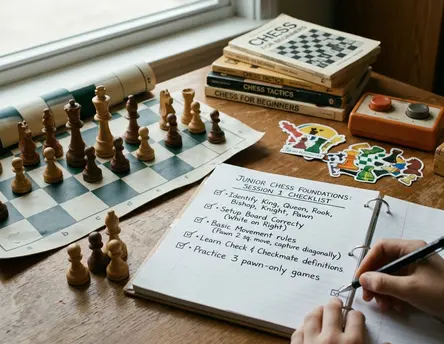
Pro Tip: Keep a one-page decision record with the child's current level, chosen format, total estimated cost, instructor contact, trial-session reaction, and two improvement goals for the summer.
Reassess after the camp using concrete outputs: games recorded, tactics themes learned, coach feedback received, and whether the child wants to continue structured study.
Scope and Limitations of This Guidance
Use these criteria as a decision framework, not as a substitute for current provider confirmation. Camp schedules, hosts, teaching staff, payment rules, travel arrangements, and dress requirements change yearly. Always confirm current details directly.
Specific examples reflect Chess For Juniors programs and historical camp coverage and may not generalize. Items such as branded attire, bank-check or cash balances, weekday group instruction, weekend workshops, residential accommodations, and travel fare classes are operational details parents should verify in the current registration packet. References to dated coverage, such as mid-2000s club news and tournaments, are illustrative of program history, not current offerings.
Ask for the most recent parent handbook, daily schedule, cancellation policy, and packing list before paying the final balance. Finally, this guidance is most useful for structured scholastic chess programs; a recreational community activity with no tournament or curriculum goals may not need this level of screening.