
Why Communities Struggle to Access Structured Chess Instruction
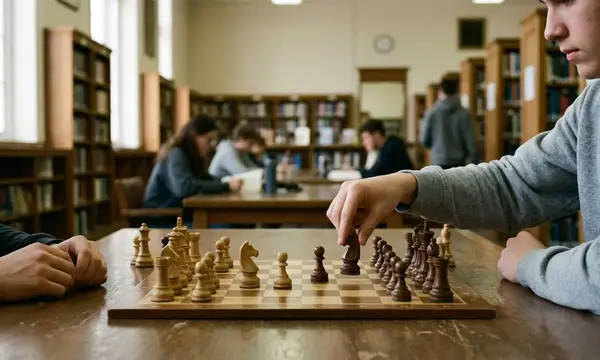
A familiar scenario plays out in scholastic communities everywhere. A school club boasts excellent weekly attendance. Students play dozens of casual games, yet the coach finds themselves reteaching basic mates and opening principles month after month. The enthusiasm is present, but the progression stalls.
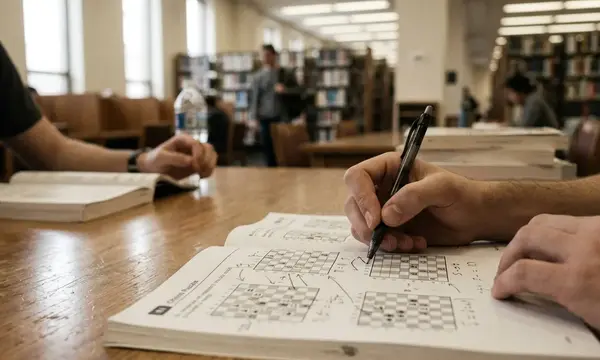
This gap between casual play and tournament-ready skill development is a structural problem. Students can complete games, but they have not been taught a repeatable process for checking forcing moves, spotting pins, or converting basic king-and-pawn endings. Parents and coaches often have access to instructional materials but lack a turnkey program model to implement them effectively.
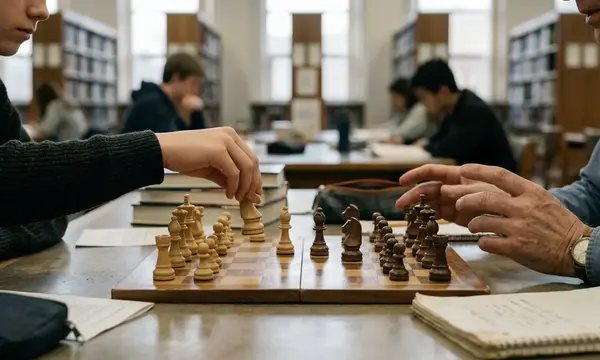
Structured instruction proves most valuable for players who have moved beyond learning piece movement but are not yet comfortable with notation, clock use, or tournament pairings. A local camp gains traction fastest when at least two feeder settings already exist. Think of an elementary school club paired with a Thursday night library chess group. The organizer can reach engaged families without building interest from zero.
What Does a CFJ Camp Actually Deliver?
A CFJ-style camp works backward from the player experience. We decide what a beginner, an early improver, and a tournament-prep student should be able to execute by the final day, then build the instruction blocks to hit those targets. The foundation is a structured curriculum built on pattern recognition and progressive skill tiers.
In practice, a workable day usually relies on 35-to-50-minute lesson blocks. After that window, attention drops. We shift immediately into puzzle practice or supervised games. Typical formats run as either half-day sessions of roughly three hours or full-day sessions spanning about five to seven instructional hours, including breaks.
Grouping dictates the pace of the entire camp. You must separate true beginners from players who already know checkmate patterns, notation, and clock rules. Mixing those groups usually slows both groups down. Tournament simulation brings the curriculum together. This includes touch-move practice, clock handling, scorekeeping for older players, pairings by score group, and a short post-game review.
How to Assess Whether Your Area Is Ready
Start by asking potential partners what chess activity already exists. Do not just announce dates and hope for sign-ups. One early planning mistake is collecting broad lists of interested families without asking about their actual availability.
Readiness questions should capture student age, school grade, current experience level, preferred week, half-day versus full-day interest, and whether the child has played with a chess clock before. Map your feeder partners within a practical parent-driving radius. In suburban areas, this is often 15 to 25 minutes. In dense urban neighborhoods where parking is difficult, the radius shrinks considerably.
Begin demand checks 8 to 12 weeks before the target camp week. Schools, libraries, and parent groups need that lead time to share information. Avoid scheduling during district testing, the first week after school ends, and the final week before school resumes, unless local families specifically request those windows.
Setting Up the Venue, Equipment, and Staffing
Venue decisions happen after estimating group size and supervision flow, not just after finding an open room. The best space allows instruction, quiet games, parent pickup, and coach movement to happen simultaneously.
Warning: A community center might book a large multipurpose room for you but schedule a loud summer recreation group next door. Students can play casual games in that environment, but focused instruction and tournament simulation become impossible.
Plan for rectangular tables that allow two boards per 6-foot table. This spacing prevents crowding clocks, score sheets, water bottles, and captured pieces. Budget one tournament-style set per two students, plus several spare sets for odd numbers, demonstration positions, and replacement pieces.
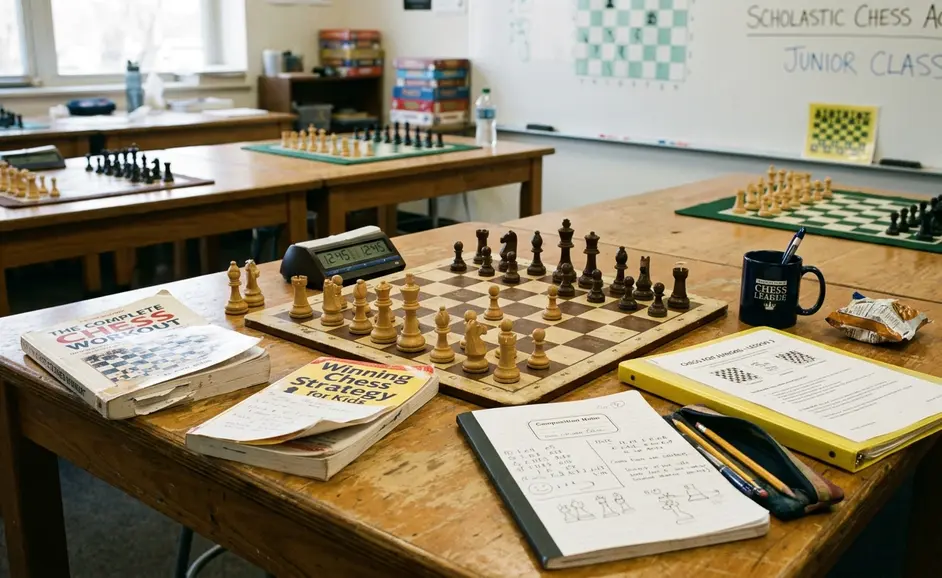
Useful onsite materials include a demonstration board or projection option, pairing sheets, name tags, pencils, score sheets for advanced groups, extra queens, first-aid supplies, and a visible daily schedule. A practical staffing plan assigns one lead coach to run instruction and one assistant or floor monitor. Once the group is large enough, bathroom breaks, behavior support, and game questions will interrupt teaching without that second person.
Youth programs must complete background-check and facility access requirements before registration opens. Approval can take anywhere from several business days to multiple weeks depending on the school or municipality.
Running the Program: A Step-by-Step Rollout
Rollout follows a diagnostic-to-application sequence. Place students first, teach one core idea at a time, make them apply it in controlled positions, then let them use it in games before adding new concepts.
Pre-camp placement requires a 10-to-15-minute intake task. Test basic mate recognition, a legal move check, a tactical puzzle, and ask a short question about prior tournament or club experience.
Pro Tip: Placing students by age alone is a common failure point. A first-time middle schooler and an experienced elementary tournament player have entirely different needs and should not receive the same lesson.
A strong daily rhythm moves from a lesson to a guided puzzle set, into supervised play, followed by a review position, and ends with a short reflection for parents or coaches. We often reference foundational concepts from Robert M. Snyder: Senior Master and author, iUniverse, to ground these early lessons.
Beginner groups spend the first day on check, checkmate, stalemate, piece safety, and board coordinates before playing timed games. Improver groups rotate through pins, forks, discovered attacks, opening development, king safety, and basic endgames over a 4-to-5-day camp. The final day features a controlled tournament block. Use clear pairings, simple standings, and a coach-led review of two or three instructive games rather than just handing out prizes.
Who Supports You: The CFJ Coaching Network
Support works best when local organizers handle community access while the coaching network supplies the instructional backbone. The organizer knows the schools, calendars, and parent communication channels.
Onboarding includes a planning call, a sample daily schedule, placement guidance, an equipment list, a parent communication template, and a coach briefing before the first session. Shared lesson materials are organized by skill tier rather than by age. A third grader with tournament experience requires a different group than an older first-time player.
Local partners should identify one onsite decision-maker for attendance, late pickup, room access, and emergency contact procedures. Coach preparation happens at least 10 to 15 business days before camp. Lesson assignments, room layout, and student groups cannot be finalized the night before opening day.
Scope, Limitations, and What to Confirm Locally
Before confirming a launch, the organizer must reconcile three separate realities: what the curriculum can deliver, what the venue can safely hold, and what local rules require for youth programming.
Enrollment minimums are calculated from actual local costs. Factor in room rental, coach compensation, supplies, insurance or permit fees, registration processing, and expected scholarship or sibling-discount commitments. Venue capacity relies on seated chess use, not general room occupancy. Chess requires table space, aisles for coaches, and a quieter play environment than many youth activities.
Confirm who is responsible for registration, payment collection, refunds, medical forms, pickup authorization, and incident reporting before families receive the sign-up link. Youth-safety requirements vary wildly. They may include background screening, mandated-reporter training, school-district vendor approval, facility insurance certificates, or municipal recreation paperwork. Reviewing the US Chess scholastic guidelines provides a solid baseline for these operational standards.
Warning: Opening registration before background-check timing is confirmed forces the organizer to delay camp even though families have already paid.
While our framework standardizes curriculum and coaching expectations, local variables—such as municipal permit processing times and specific facility insurance mandates, mean that implementation timelines will always require regional adjustment.
Your Next Steps to Launch
The launch path moves from evidence of demand to confirmed operations. Identify families, secure a feasible venue, verify staffing and safety requirements, then publish registration only when the logistics are locked.
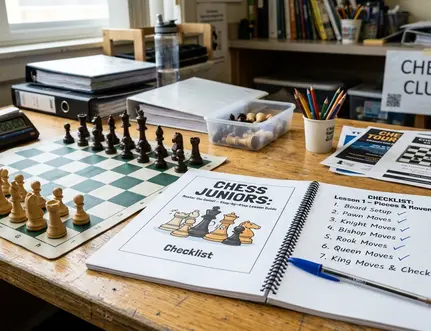
In many cases, inquiry-to-first-camp planning commonly needs 6 to 10 weeks when a new venue, new partner, or school approval process is involved. For a repeat location with prior clearance and existing equipment, planning compresses to 3 to 5 weeks if coaches and room access are already confirmed.
The first contact should outline the proposed location, preferred season, expected age range, known chess activity in the area, possible feeder schools or clubs, and whether the organizer wants half-day or full-day programming. Registration opens only after the daily schedule, pickup rules, refund policy, supervision plan, and required forms have been reviewed.
Key Takeaway: CFJ Camp Launch Checklist
- List existing chess touchpoints: school clubs, library groups, recreation programs, homeschool networks, and parent contacts.
- Collect readiness information: student age, experience level, preferred week, schedule preference, and clock familiarity.