Why the First Lesson Decides Whether a Junior Stays
I once watched a well-meaning instructor open a beginner session by placing all the pieces on the board. Within about fifteen minutes, he explained check, checkmate, castling, en passant, stalemate, and pawn promotion. The young student could repeat a few vocabulary words, but she stopped touching the board entirely. A couple of weeks later, she quit. She told her parents that chess had "too many rules."
The first session shapes a child's emotional association with the game far more than rule mastery. Frame lesson one as a confidence session, not a rules download. The coaching decision is to make the child leave saying, "I can do something on the chessboard," even if that something is only setting it up.
For a six-to-nine-year-old beginner, keep direct explanation brief—about a minute or two—before the child moves a piece. A workable first-session target is roughly half an hour, with short task blocks rather than one long activity. Use a visible success marker by the end. The child should be able to point to the king, queen, rook, bishop, knight, and pawn, and demonstrate at least one legal pawn move.
What Should You Know Before You Begin?
Begin with a brief diagnostic conversation before touching the board. Ask the child to show what they already know rather than asking the parent for a long history. Children often reveal more accurate starting points when handed a piece.
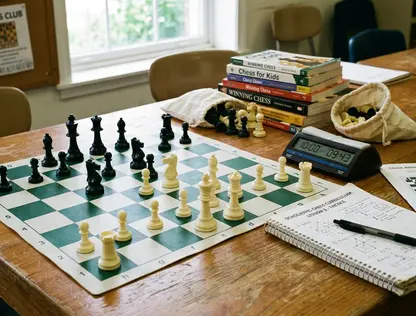
Ask three starter prompts: "Have you played before?", "Can you name any pieces?", and "Can you show me how one piece moves?" A nine-year-old who has played casually with a grandparent may skip the pawn-only opening and move quickly into legal king safety. A five-year-old true beginner may need the entire first session just for board orientation, pawns, and rooks.
In beginner lessons, age-based attention limits are a practical guide. For ages five and six, plan roughly 20 to 25 minutes of active teaching. For ages seven to ten, plan about 25 to 40 minutes if the child remains engaged.
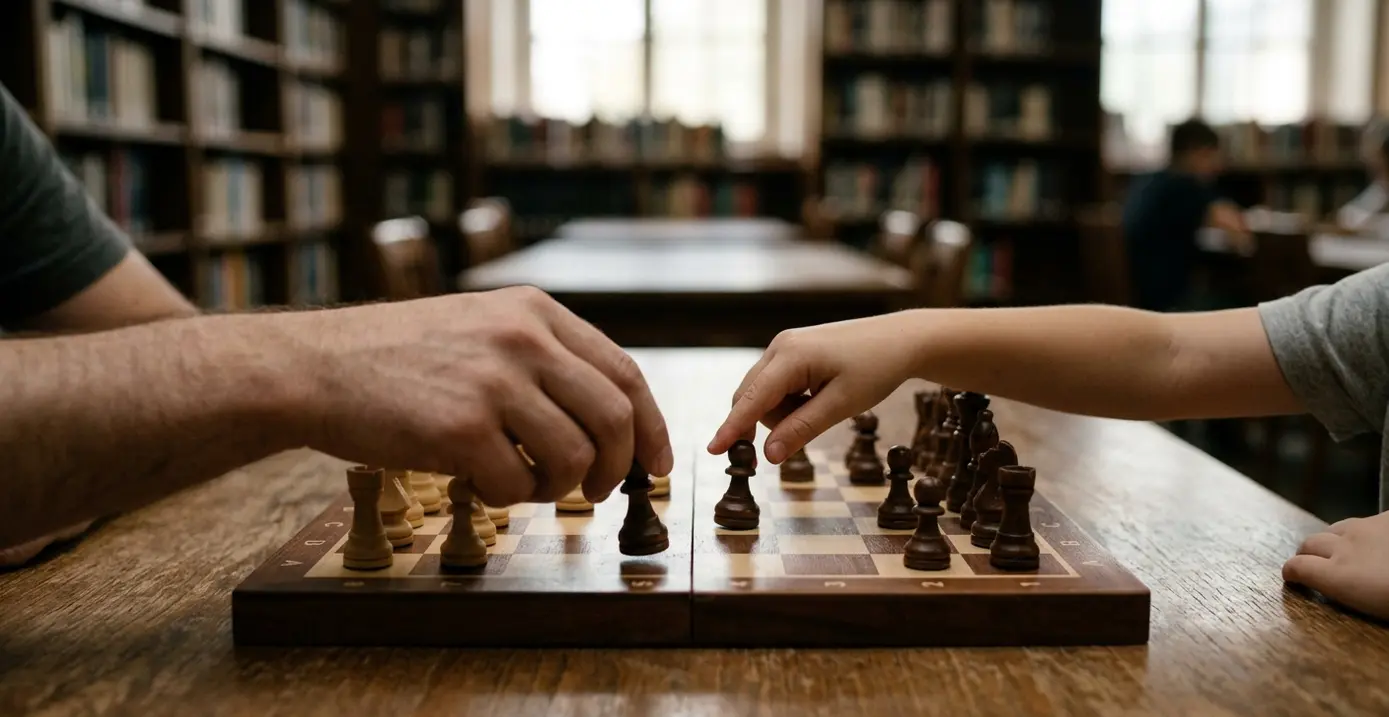
Pro Tip: Prepare the environment carefully. Use a clean board with no captured-piece clutter nearby. Spare pieces should stay off the table until needed. Set the board with a light square in each player's right-hand corner before any piece movement is taught.
Which First-Lesson Mistakes Cause Juniors to Quit?
Treat the first lesson like onboarding into a game world, not preparing for a tournament. Do not introduce castling, en passant, promotion choices, stalemate, or tournament touch-move rules in the first half-hour beginner lesson.
Avoid coach monologues longer than a couple of minutes. The child should physically move a piece at least once every few minutes. When a child makes an illegal move during exploratory play, decide whether the correction supports the current target skill. Correct only the error tied to the current objective, such as a pawn moving sideways without capturing.
Warning: Before teaching any piece movement, verify two board basics. The student must recognize the light square on the right and understand the difference between a row across the board and a column up the board.
How to Structure the First Lesson Step by Step
A full-board legal game forces too many exceptions at once: check, checkmate, blocked pieces, castling questions, and queen dominance. I dropped it from my introductory curriculum entirely. Instead, build the lesson in distinct phases.
Step 1: The Board Map
Introduce ranks, files, and corners. Teach the phrase "light on the right." Treat the board like a city map where pieces live and travel.
Step 2: Meet the Pieces
Introduce the pawn, rook, and bishop one at a time. Use one movement game per piece to isolate how they travel.
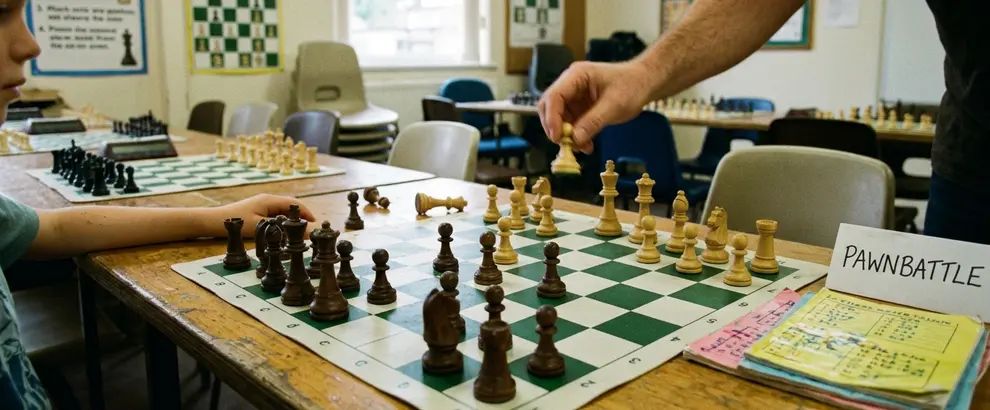
Step 3: Pawn Battle Mini-Game
Play a short game using only pawns. Start from the second rank for White and the seventh rank for Black. This isolates forward movement and diagonal capturing safely.
Step 4: King Safety
Use the language "safe square" and "unsafe square" before introducing formal check and checkmate definitions. Have the child identify squares where a piece could be captured.
Step 5: Wrap-Up
Ask for one child-stated takeaway. Issue one home challenge, such as setting up the board correctly three times before the next session.
How Do You Keep a Young Player Engaged?
Choose engagement devices that support the movement rule instead of becoming a separate performance. A rook as a tower is useful because it explains straight-line movement. A bishop as a diagonal slider reinforces color-bound paths.
Give the child the first physical action within the first couple of minutes, such as placing the rooks in the corners. Use named prompts. Ask, "Can your tower travel down this road?" for rooks and "Does your bishop stay on its colour path?" for bishops.
Offer two controlled choices at a time. Ask, "Would you like to move the rook or the pawn first?" rather than an open-ended "What do you want to do?" End the lesson while the child still wants another turn. If focus drops into repeated piece-spinning or off-board play for a few minutes, move to a recap instead of adding content.
What This Plan Does Not Cover
Define the lesson boundary openly so parents and coaches do not mistake a successful first session for a complete chess introduction. The plan is built to create orientation, movement confidence, and early pattern recognition. It is the best fit for true beginners roughly ages five to ten who cannot yet play a full legal game independently.
Teens who already know all piece moves may complete this material in about 10 minutes. They need a faster diagnostic into tactics or checkmate patterns. Group classes larger than about six children need added management routines, such as board-pairing, piece trays, and an assistant or parent helper during mini-games.
This sequence is not a complete plan for a mixed-ability club room. It assumes one child or a very small beginner group where the coach can see every board. While this sequence builds early confidence, its pacing assumes a typical attention span; children with specific learning accommodations often require shorter segments broken down further into tactile, off-board sorting exercises.
What Comes After the First Lesson?
After lesson one, sequence new material by dependency. Finish how pieces move, then introduce king danger formally, then teach basic mating patterns, then simple tactics.
Lesson two can add queen and knight movement. The knight should be taught separately because its jump pattern is the least visually obvious. Lesson three can introduce check, escaping check, and the idea that the king cannot be captured. Lesson four can cover checkmate with king-and-rook support patterns or simple back-rank examples, depending on age and attention.
Home practice should be short. Five to ten minutes on a few separate days is usually more productive than one long weekend session. Track concrete skills: board setup, piece names, legal pawn moves, legal rook moves, legal bishop moves, recognizing an attacked square, and completing a pawn battle.
Key Takeaway: Parents should see progress as a checklist of small, repeatable actions rather than immediate game victories.
For broader curriculum planning, US Chess scholastic resources offer excellent structural guidelines. As Senior Master and author Robert M. Snyder often emphasizes in his foundational texts, early mastery of basic mechanics prevents bad habits later.
First Junior Chess Lesson Coach Checklist
- Before the child sits down: Board is clean, light square is on the right, distracting extra pieces are removed.
- First few minutes: Child shows any prior knowledge by naming or moving a piece.
- Wrap-up: Child can point to the king, queen, rook, bishop, knight, and pawn, and demonstrate at least one legal pawn move.