Why Study the Profiles of Scholastic Champions?
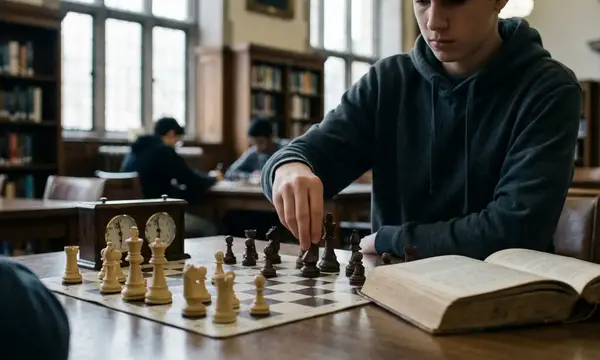
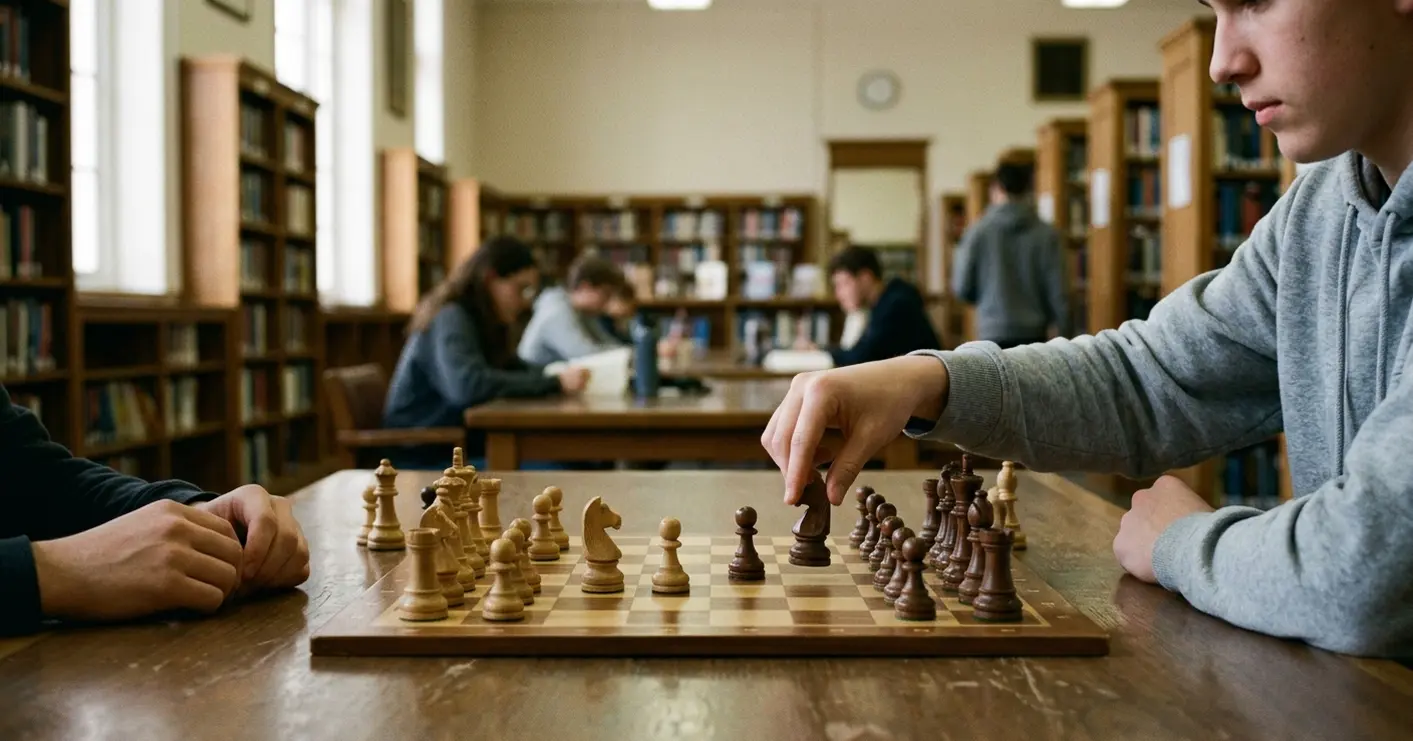
Parents and coaches stand behind the ropes at weekend Swiss-style tournaments and inevitably ask the same question. Why does one child handle a complex middlegame calmly while another rushes the exact same position? The answer rarely involves raw talent. We see the foundation of competitive readiness built during weekday club practice and standard lesson blocks of about 25 to 45 minutes.
In many club settings, the first 6- to 18-month period of regular play serves as an important development stretch. During this time, habits around notation, game review, and puzzle discipline usually become visible. Studying these profiles reveals repeatable routines rather than rare gifts. These archetypes represent common scholastic development pathways, giving families a practical model for daily practice.
Criteria for Selecting These Champion Profiles
We organized this profile set around coaching levers a parent or instructor can actually influence. Study rhythm, tournament exposure, review habits, and emotional recovery form the core of our criteria. Each archetype assumes repeated tournament participation across a school term or camp season, rather than a single standout result.
Selection favors observable behaviors. We look for juniors keeping scoresheets, reviewing losses within the next day or two, attending recurring practice sessions, and using puzzles tied to specific tactical themes. Each profile reflects a distinct path to scholastic success, emphasizing transferable habits that coaches can teach and parents can support.
1. The Early Pattern Master
Young players often improve first by recognizing recurring board shapes before they can explain long strategic plans. Senior Master and author Robert M. Snyder (iUniverse) established early on that pattern recognition forms the bedrock of scholastic development. The Early Pattern Master builds intuition through spaced repetition.
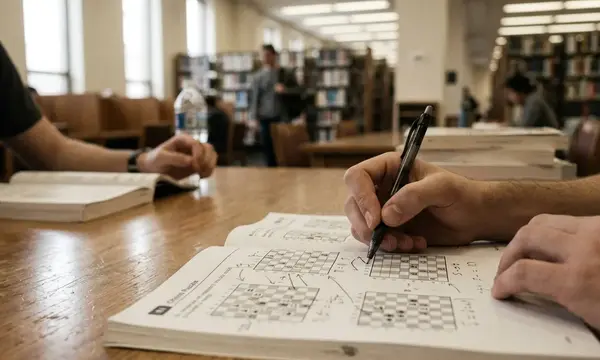
A realistic routine involves about 10 minutes of puzzles on school mornings or right before dinner. The key is isolating one theme at a time. A student might focus exclusively on the back-rank mate, fork, pin, skewer, discovered attack, or basic mating nets. A practical cycle covers around a dozen positions per session for most weekdays, followed by a mixed review set at the end of the week.
Warning: A junior who solves many puzzles online may still fail in tournaments if the puzzles are untimed and disconnected from real game positions with clock pressure.
2. The Resilient Competitor
Tournament strength requires more than calculation skill. In scholastic sections, the player who resets after a bad round protects the next game from becoming a secondary casualty. The Resilient Competitor treats a loss as a data point, reviewing lost games without self-criticism.
A useful post-loss routine starts with about a 5-minute cool-down and a quick meal or water break. Before the next pairing is posted, the player writes down one sentence identifying the turning point. Game review later separates the first clear mistake, the time situation, and the emotional trigger. Writing "moved too fast after winning a pawn" provides a concrete target for improvement, whereas "played badly" offers nothing to fix.
3. The Endgame Technician
Many scholastic games reach simplified positions where one player holds a pawn advantage, an active king, or a rook ending that neither side fully understands. The Endgame Technician thrives here. Opening memorization can look impressive in the first 10 or so moves but collapse if the player has not learned basic king safety, piece coordination, and simple endgame conversion.
Core study begins with king-and-pawn opposition, outside passed pawns, basic rook activity, the ladder mate, and king-and-rook versus king conversion. A coach can run about 15- to 20-minute endgame stations once per week. Starting from set positions with both players under about 10 minutes on the clock simulates actual tournament pressure.
4. The Self-Directed Analyst
Independent review marks one of the clearest differences between a junior who waits to be corrected and one who learns from every round. The Self-Directed Analyst builds independent decision-making rather than coach dependency.
Coach’s tip: A simple journal entry requires only four lines: the opening name or setup, the move where the player felt unsure, the best chance missed, and one training task for next week.
Have the player annotate from memory or the scoresheet first. They should compare their thoughts with a coach or engine only after an initial self-review of about 10 to 20 minutes. This simple notebook habit can start this week.
5. The Camp-and-Community Player
Growth accelerates in a chess-rich setting. The Camp-and-Community Player benefits from social learning, which sustains motivation and exposes the junior to diverse playing styles. A productive camp day often combines a short lesson block, supervised game play, puzzle races, notation review, and one analyzed game from the group.
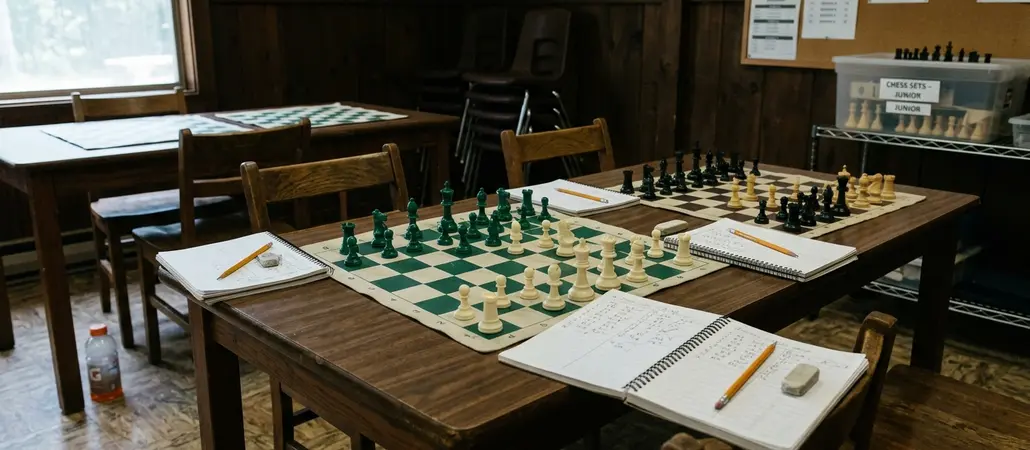
Community exposure matters most when it is regular—this might look like weekly club nights for about 8 to 12 weeks, a school-term ladder, or a multi-day camp. A child in a small school club may need slower community-building steps than a child already surrounded by weekly peer competition; the same study plan will feel different in those two settings.
What Habits Do All These Champions Share?
These profiles share a common scholastic training pattern. None rely on talent alone. In well-run scholastic programs, the shared routine forms a predictable weekly loop.
The baseline schedule includes tactics on four or five short days, one endgame block, one reviewed game, and one live practice session. The habits show up in small details. Champions bring a scoresheet to the board. They write down the clock situation after a mistake. Lost positions get replayed. They ask for the reason behind a move rather than only the best move.
Scope and Limitations
These profiles are coaching composites. They represent recognizable patterns from scholastic development, stripped of exact ratings, titles, school names, or personal tournament histories.
We describe outcomes qualitatively. A player develops more stable tournament decisions or better conversion of simple advantages.
Key Takeaway: These profiles serve as teaching models. They are highly useful for planning practice routines, but less useful for predicting whether a specific child will win a particular section or title.
Applying These Lessons
Translating these profiles into a first-month routine requires a plan light enough for school nights. Start with a monthlong schedule: three short tactics sessions, one about 20-minute endgame session, one annotated game review, and one practice game each week.
Match the emphasis to the child. A fast-moving attacker gets endgame and notation work. A cautious player gets tactical pattern drills. A tournament-anxious player gets post-game reset routines before adding more events. As you build this schedule, ensure your event planning aligns with US Chess scholastic regulations to keep the competitive experience standard and fair.